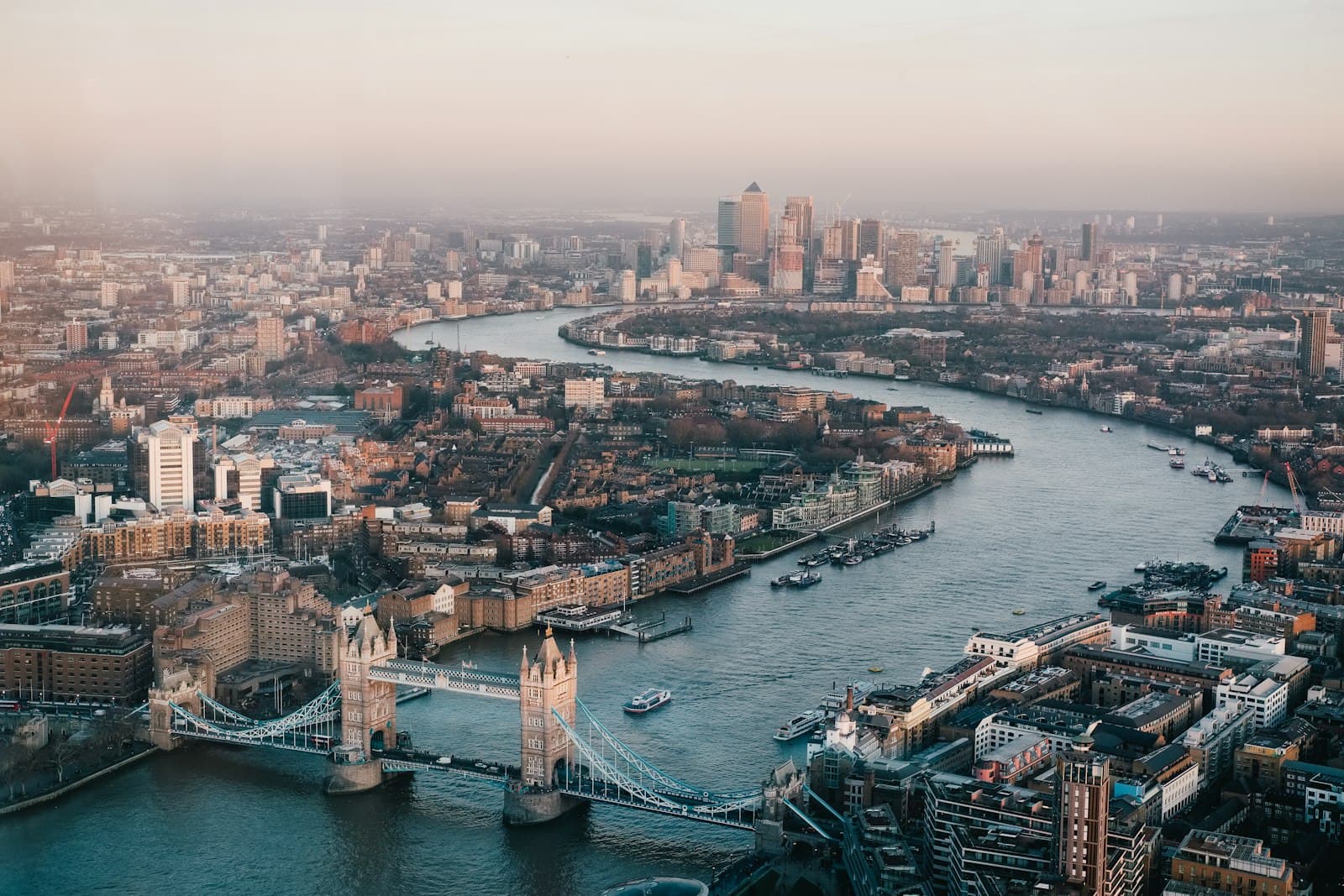
Study in United Kingdom
Historic universities, one-year master's degrees, and a fast route to a globally recognised qualification.
SkillGen is an educational information resource, not a registered migration agent, education consultant, or visa advisor. Requirements change frequently and vary by individual circumstances. Last verified 5 September 2026 — always confirm current details with the official source before making any decision.
About UK
The United Kingdom is made up of England, Scotland, Wales, and Northern Ireland, and it packs an unusual variety of landscapes and city life into a relatively small area — from the fast pace of London to the compact university towns of Oxford, Cambridge, York, and St Andrews. The climate is mild and famously changeable, with cool winters, gentle summers, and rain spread fairly evenly through the year, so students generally need layered clothing rather than extreme cold- or heat-weather gear.
The UK has one of the largest international student populations in the world, and Indian students in particular form one of the biggest overseas cohorts on most campuses. This means most university cities already have an established ecosystem of Indian grocery stores, restaurants, temples, gurdwaras, and cultural societies, which tends to ease the initial adjustment.
Students are typically drawn to the UK for its globally recognised universities, the option of finishing a master's degree in a single year, and easy access to the rest of Europe for travel during holidays. English being the primary language everywhere also removes a layer of adjustment that students moving to non-English-speaking countries often face.


Life as an international student
International students on a Student visa are typically permitted to work part-time during term — as a general guide, this is often capped at up to 20 hours per week for university-level courses, with full-time work usually allowed during official vacation periods. Because these limits are set by immigration rules and can change, always confirm the exact current allowance on your visa or Confirmation of Acceptance for Studies (CAS) before taking up any work.
Cost of living varies significantly by city — London is considerably more expensive for rent and daily expenses than cities like Sheffield, Coventry, or Belfast. Many students share flats or live in university halls of residence to manage costs, and budgeting for gas and electricity in winter is worth planning for in advance.
The UK is generally considered a safe place to study, with university cities well used to supporting large international communities. Most universities run dedicated international student welcome programmes, buddy schemes, and societies for students from India and other countries, which helps a lot with the initial cultural adjustment and building a social circle quickly.
The education system
UK higher education is delivered through universities that are largely autonomous in how they design and teach their courses, though all are subject to national quality oversight. Teaching typically combines lectures, smaller seminar groups, and independent study, with a strong emphasis on essays, coursework, and exams rather than continuous attendance-based grading.
Because bachelor's degrees in England, Wales, and Northern Ireland are generally more specialised and shorter than in many other countries, students are usually expected to have already settled on a subject area before they start — there is typically less flexibility to switch majors partway through compared to, for example, the US system.
Foundation Year
1 year
A preparatory year for students who don't yet meet direct entry requirements for a bachelor's degree, often used by international students to bridge academic or English-language gaps.
Bachelor's Degree
3 years (England, Wales, Northern Ireland) / 4 years (Scotland)
Scotland's degrees are typically a year longer and somewhat broader in the first two years before students specialise.
Master's Degree
1 year (typically), sometimes 2 years for research-intensive or specialist programmes
The one-year taught master's is a distinctive feature of the UK system and a major draw for international students wanting a faster, lower-cost postgraduate route.
PhD / Doctorate
Typically 3-4 years
Usually research-only, without the taught coursework component common in some other countries.
Government-approved institutions
Every institution recruiting international students in UK must appear on the official Register of Student Sponsors maintained by the UK Home Office (GOV.UK).
This is a curated sample, not an exhaustive or official list. Verify an institution's current approved status on the official register above before applying or paying any fee.
University of Manchester
Manchester · Large, research-intensive university with a broad range of programmes
University of Birmingham
Birmingham
University of Leeds
Leeds
University of Sheffield
Sheffield
University of Glasgow
Glasgow · One of the UK's oldest universities
University of Nottingham
Nottingham
University of Bristol
Bristol
University of Southampton
Southampton
Top-ranked institutions
Several UK universities are consistently ranked among the world's top institutions by QS and Times Higher Education — check current league tables for the latest standings, since rankings are updated annually.
Russell Group
A group of 24 UK research-intensive universities, broadly comparable in prestige to the Ivy League in the US or the IITs in India.
Admission process & eligibility
- 1Shortlist universities and courses based on your subject, budget, and career goals.
- 2Check entry requirements for your specific course, including academic grades and English test scores.
- 3Apply through UCAS for most undergraduate courses, or directly to the university for most postgraduate courses.
- 4Submit required documents: academic transcripts, statement of purpose, references, and test scores.
- 5Receive and evaluate offers, then accept your chosen offer and pay any tuition deposit requested.
- 6Once you hold an unconditional offer, the university issues a CAS, which you then use for your visa application.
Academic
Academic transcripts
Completed schooling or a bachelor's degree with grades meeting the specific course's minimum entry criteria, which vary widely by university and subject.
English Test
IELTS Academic (or equivalent)
Typically an overall band of 6.0-6.5 for undergraduate courses and 6.5-7.0 for postgraduate courses, usually with no individual band below 5.5-6.0 — exact requirements vary by institution and programme. TOEFL and PTE Academic are also widely accepted.
Other
Statement of purpose / personal statement
A written statement explaining your motivation for the course, usually submitted via UCAS for undergraduate applications or directly for postgraduate ones.
Other
Academic or professional references
Most courses require one or two references from teachers, professors, or employers.
Academic
Standardised admissions tests (select courses)
Some courses, such as medicine, law, or certain postgraduate management programmes, may require additional tests like the UCAT, LNAT, or GMAT/GRE.
Visa: Student Route (formerly Tier 4)
Visa outcomes are decided solely by the relevant government authority based on your personal circumstances. Nothing on this page is immigration advice — always confirm current requirements with the official source linked below.
Receive your CAS(Varies by university)
Your university issues a Confirmation of Acceptance for Studies once you accept an unconditional offer and meet all conditions.
Pay the Immigration Health Surcharge (IHS)(Paid during application)
Paid upfront as part of the online visa application to cover access to NHS healthcare during your stay.
Complete the online visa application(Around 30-60 minutes to complete)
Fill in the Student Route application on the GOV.UK website and pay the visa application fee.
Attend a biometrics appointment(Typically scheduled within a few weeks)
Book and attend an appointment at a visa application centre to provide fingerprints and a photograph.
Await a decision(Commonly around 3 weeks, can vary)
Processing times vary, but decisions for most students are typically issued within a few weeks of the appointment.