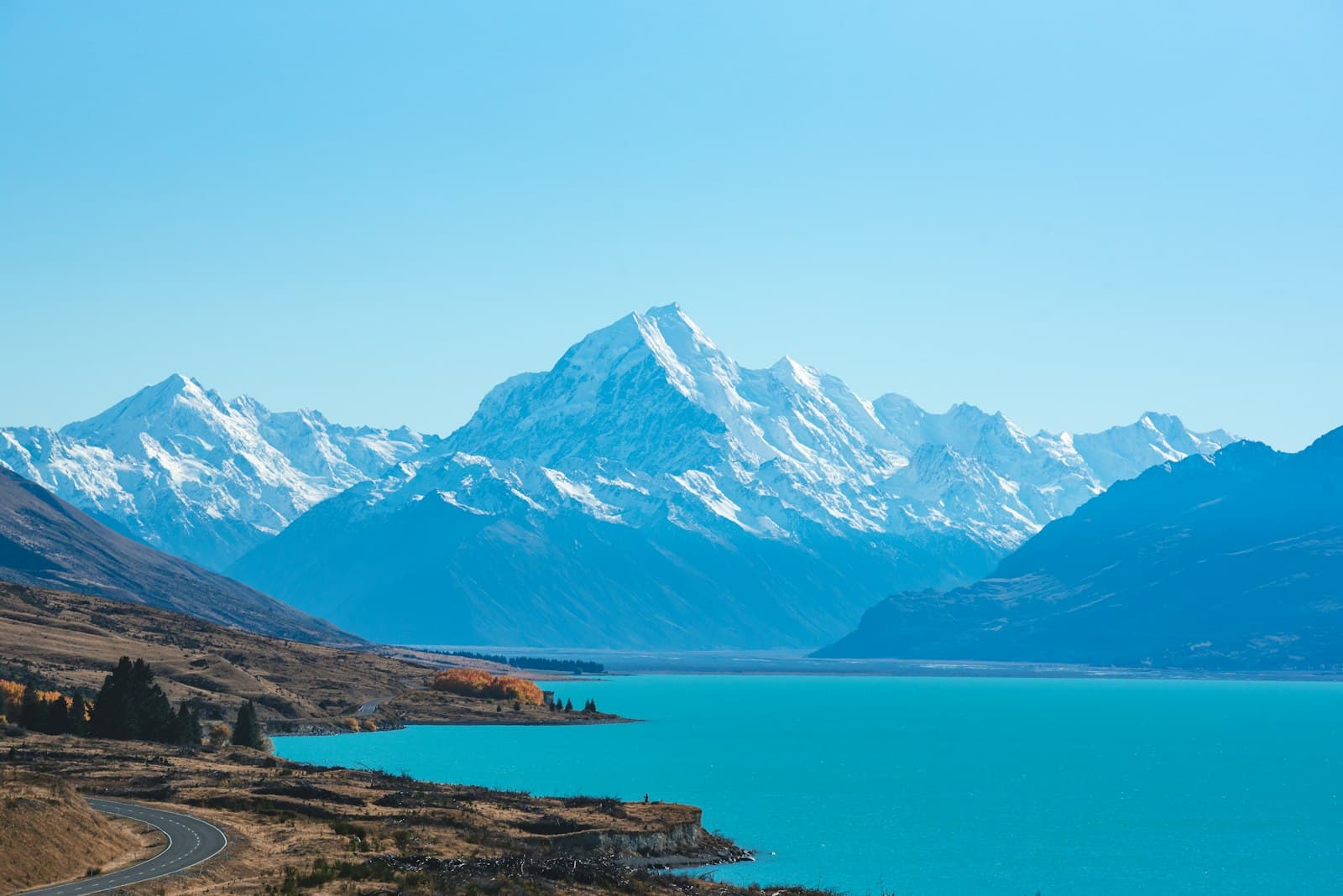
Study in New Zealand
Small class sizes, dramatic natural scenery, and a close-knit international student experience.
SkillGen is an educational information resource, not a registered migration agent, education consultant, or visa advisor. Requirements change frequently and vary by individual circumstances. Last verified 5 September 2026 — always confirm current details with the official source before making any decision.
About NZ
New Zealand is a compact island nation known for its dramatic landscapes, from beaches to mountains to forest, all within relatively short travel distances of its main cities. Auckland, Wellington, Christchurch, and Dunedin are the primary student hubs, each offering a noticeably smaller and quieter environment than large cities elsewhere.
New Zealand has a small but growing Indian student population, and while its cultural infrastructure for Indian students is not as extensive as in Australia or Canada, most main cities have Indian grocery stores, restaurants, and community associations.
Students are often drawn to New Zealand for its high-quality, government-backed education system, smaller class sizes that allow for more individual attention, and a generally relaxed, outdoors-oriented lifestyle alongside study.


Life as an international student
International students on a Fee Paying Student Visa are typically permitted to work part-time during term — as a general guide, this has generally allowed up to 20 hours per week, with full-time work often permitted during scheduled breaks, though eligibility can depend on your specific course and level of study. Always confirm the current rules attached to your visa before working.
Cost of living in New Zealand is moderate compared to Australia, though Auckland and Wellington are noticeably pricier than smaller centres like Dunedin or Hamilton. Many students opt for homestays in their first months, which can also help with cultural adjustment.
New Zealand is widely regarded as safe and welcoming, with a strong outdoors culture that many international students end up embracing. Because student communities are smaller than in bigger destinations, international offices tend to offer a more personal level of support, though the overall Indian student network is less extensive than in Australia or Canada.
The education system
New Zealand's higher education system is anchored by eight government-funded universities alongside institutes of technology and polytechnics offering more vocational qualifications. Teaching quality and standards are monitored nationally, giving a fairly consistent experience across institutions.
Class sizes are often smaller than in larger study destinations, and many programmes emphasise research skills and independent thinking even at the undergraduate level.
Foundation Programme
Typically 1 year
Used by some international students to meet entry requirements for a New Zealand bachelor's degree.
Bachelor's Degree
3 years (typically), 4 years for some professional fields
Fields like engineering and some health sciences can take 4 years.
Master's Degree
1-2 years
Some universities offer a 1-year master's for students who already hold an Honours bachelor's degree; others require 2 years.
PhD / Doctorate
Typically 3-4 years
Research-focused, and international PhD students are often charged domestic-equivalent fees, which is a distinctive feature of the New Zealand system.
Government-approved institutions
Every institution recruiting international students in NZ must appear on the official List of Registered Tertiary Education Organisations maintained by the New Zealand Qualifications Authority (NZQA).
This is a curated sample, not an exhaustive or official list. Verify an institution's current approved status on the official register above before applying or paying any fee.
University of Auckland
Auckland · New Zealand's largest university
University of Otago
Dunedin · New Zealand's oldest university
Victoria University of Wellington
Wellington
University of Canterbury
Christchurch
Massey University
Palmerston North / Auckland / Wellington (multi-campus)
University of Waikato
Hamilton
Top-ranked institutions
New Zealand's universities are regularly ranked among the world's top institutions by QS and Times Higher Education — check current league tables for the latest standings, since rankings are updated annually.
New Zealand's 8 Universities
All 8 New Zealand universities are public and consistently rank among the world's top institutions.
Admission process & eligibility
- 1Research universities and programmes, checking that the institution is on the NZQA register.
- 2Confirm entry requirements, including academics and English test scores, for your chosen course.
- 3Prepare and submit your application, along with transcripts and supporting documents, directly to the university.
- 4Receive an Offer of Place and accept it by paying the required deposit or tuition fees.
- 5Receive your official Offer of Place confirmation, which is required to apply for your visa.
- 6Apply for your Fee Paying Student Visa using the confirmed offer.
Academic
Academic transcripts
Completed schooling or a bachelor's degree meeting the minimum grade requirements, which vary by institution and programme.
English Test
IELTS Academic (or equivalent)
Typically an overall band of around 6.0-6.5 for undergraduate and 6.5-7.0 for postgraduate courses, with exact requirements varying by institution and programme. PTE Academic and TOEFL iBT are also generally accepted.
Other
Statement of purpose
Often required both for university admission and as supporting evidence for the visa application, explaining your study plans and intent to return home or move on after your studies.
Other
Proof of funds
Evidence of sufficient funds to cover tuition and living costs is required for the visa application, with specific amounts set by Immigration New Zealand.
Other
Letters of recommendation
Commonly requested for postgraduate applications, typically one or two references from academic or professional contacts.
Visa: Fee Paying Student Visa
Visa outcomes are decided solely by the relevant government authority based on your personal circumstances. Nothing on this page is immigration advice — always confirm current requirements with the official source linked below.
Receive your Offer of Place(Varies by university)
Issued by the university once you accept your offer and pay any required deposit or fees.
Arrange finances and health/travel insurance(1-2 weeks to prepare)
Gather proof of funds and arrange the medical and travel insurance required for your visa.
Complete medical and chest X-ray checks if required(Scheduled in advance)
Some applicants need to complete a medical examination depending on length and nature of stay.
Submit the online visa application(Around 1 hour to complete)
Apply through Immigration New Zealand's online portal and pay the application fee.
Await a decision(Commonly several weeks, can vary)
Processing times vary depending on the time of year and completeness of the application.